Timeline Explorer
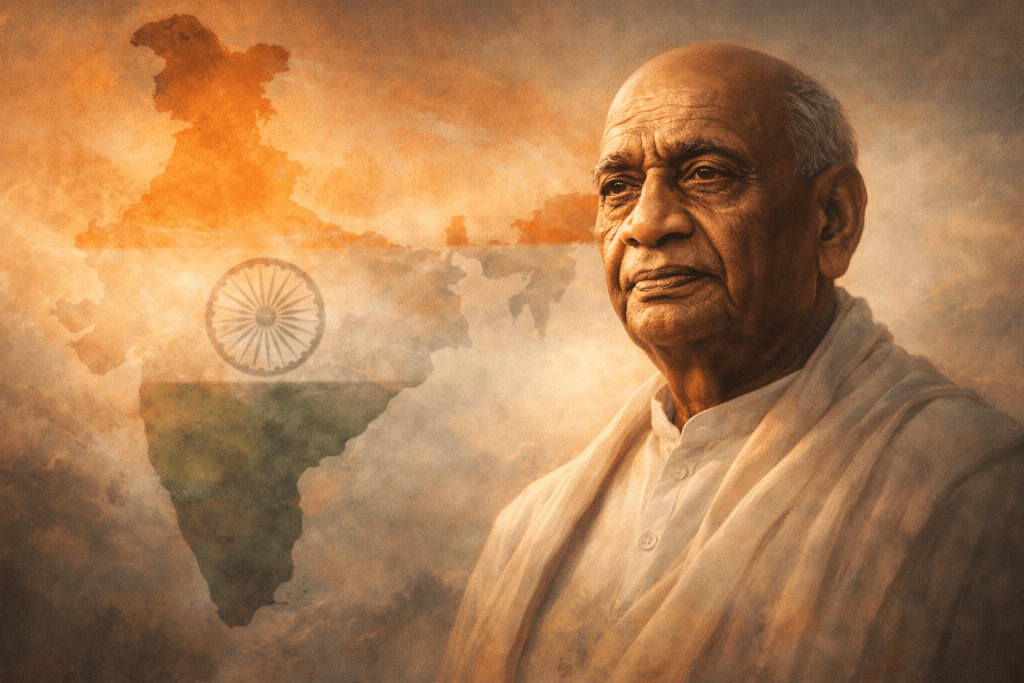
Birth (1875)
Birth: 31 October 1875
Place: Nadiad, Gujarat, India
Family Background: Born into a humble farming family.
Year: 1875
Location: Nadiad, Gujarat
Significance: His rural upbringing shaped his discipline, resilience, and strong character.
Born: 31 October 1875
Origin: Gujarat, India
Note: The birth of the leader who would later unify India.
Era: British India (1875)
Birthplace: Nadiad
Importance: Born during colonial rule, he grew up to become a key architect of independent India.
Major Movements
1918
Kheda Satyagraha
Led farmers’ protest against unfair tax collection in Gujarat.
1920
Non-Cooperation Move
Supported Gandhi’s call to boycott British institutions.
1928
Bardoli Satyagraha
protest against increased land revenue; earned the title “Sardar”.
1930
Disobedience Movement
Organized protests and defied British laws peacefully.
1942
Quit India Movement
Actively participated in the demand for British withdrawal.
1947
Integration of States
Unified 562 princely states into the Indian Union after independence.
🇮🇳 Independence of India (1947)
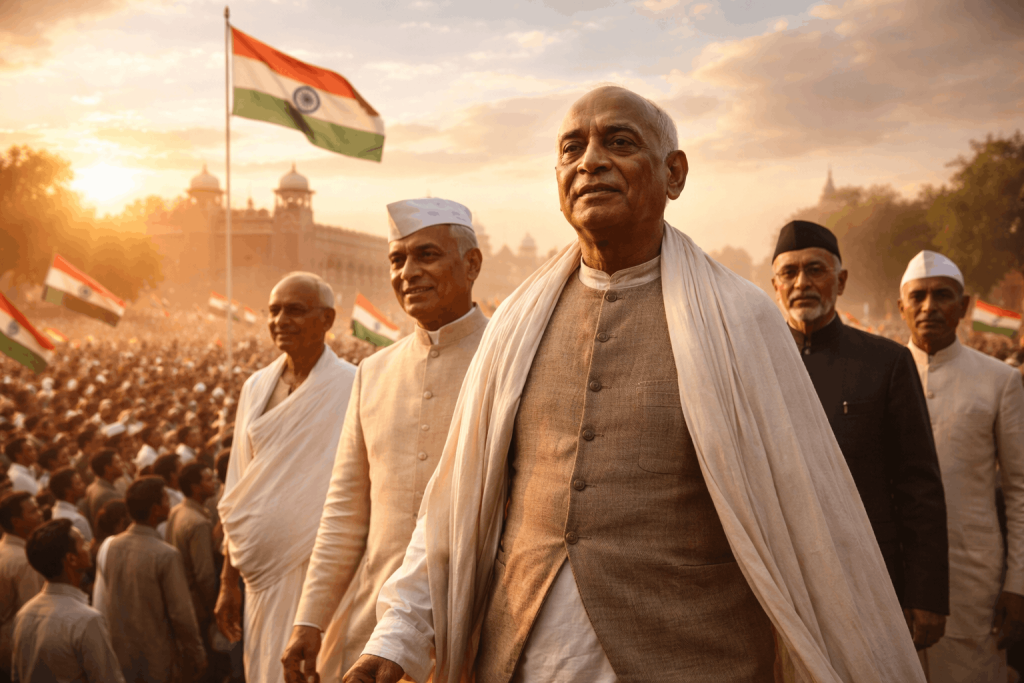
On 15 August 1947, India achieved independence from British rule. During this historic transition, Sardar Vallabhbhai Patel played a crucial role in shaping the newly independent nation. As India’s first Deputy Prime Minister and Home Minister, Patel was responsible for maintaining internal security and administrative stability at a time when the country was facing communal violence and the challenges of Partition.
One of his greatest achievements after independence was the integration of 562 princely states into the Indian Union. Through strong leadership, negotiation, and decisive action, he ensured that India remained united rather than divided into separate kingdoms.
Patel’s efforts laid the foundation for a strong, unified, and stable India, earning him the title “Iron Man of India.”
Integration of States
🇮🇳 Junagadh (1947)
In 1947, the princely state of Junagadh, located in present-day Gujarat, was ruled by a Muslim Nawab while the majority of its population was Hindu. Despite being Sardar Vallabhbhai Patel strongly opposed this move. Through diplomatic pressure and strategic action, India took administrative control of the state. In February 1948, a public referendum (plebiscite) was held, where an overwhelming majority voted in favor of joining India. Thus, Junagadh officially became part of the Indian Union, marking an important success in Patel’s mission to unify the nation.
🇮🇳 Hyderabad (1948)
In 1947, the princely state of Hyderabad was ruled by the Nizam, who wanted to remain independent instead of joining India. Hyderabad was located in the heart of India,threat to national unity. Under the leadership of Sardar Vallabhbhai Patel, the Indian government launched “Operation Polo” in September 1948, a brief military action to restore stability. Within five days, the Nizam surrendered, and Hyderabad officially became part of the Indian Union. This decisive action strengthened India’s unity and further established Patel as the “Iron Man of India.”
🇮🇳 Kashmir (1947)
In 1947, the princely state of Jammu and Kashmir was ruled by Maharaja Hari Singh, who initially chose to remain independent after India’s independence. In October 1947, tribal forces supported from across the border invaded Kashmir, creating a serious security crisis. Facing this threat, the Maharaja signed the Instrument of Accession to join India on 26 October 1947. Following this, Indian troops were airlifted to defend the region. The accession of Kashmir became one of the most significant and sensitive events in the integration of India after independence.
Death (1950)
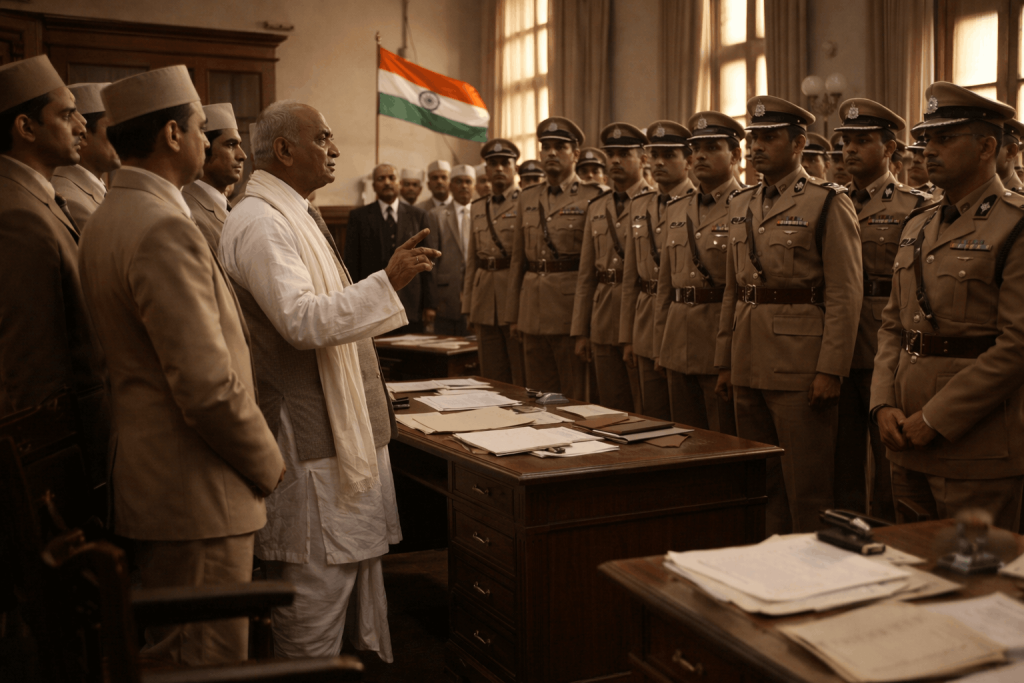
Sardar Vallabhbhai Patel passed away on 15 December 1950 in Bombay (now Mumbai) after a severe heart attack. In the months leading up to his death, his health had been declining due to intense workload and prolonged stress during the critical early years of independent India.
At the time, Patel was serving as India’s Deputy Prime Minister and Home Minister, having successfully led the integration of over 500 princely states and laid the foundation of India’s administrative framework. His death came at a crucial stage when the young nation was still stabilizing after Partition.
He was given a state funeral with full national honors, and thousands gathered to pay their last respects. Leaders across political lines acknowledged his unparalleled contribution to national unity and governance.
Patel is remembered as the “Iron Man of India”, not only for his firmness and decisive leadership but also for his vision of a strong, united, and disciplined nation.
In recognition of his historic contribution, he was posthumously awarded the Bharat Ratna, India’s highest civilian honor, in 1991.
Even decades after his passing, his legacy continues to shape India’s unity, administration, and national integrity.
Posthumous Honors
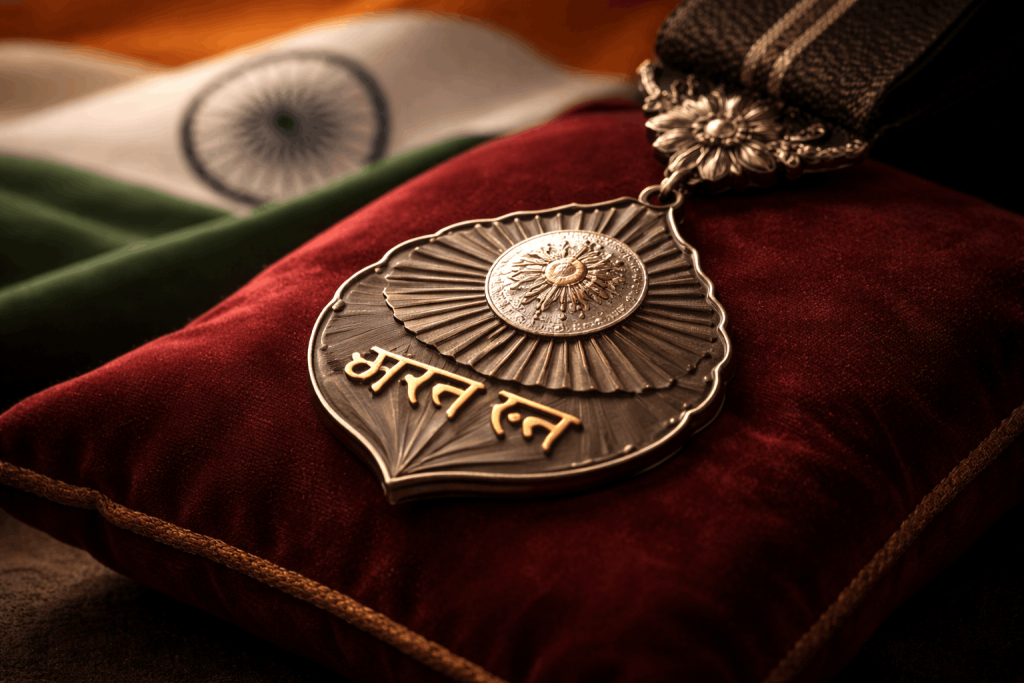
Bharat Ratna (1991)
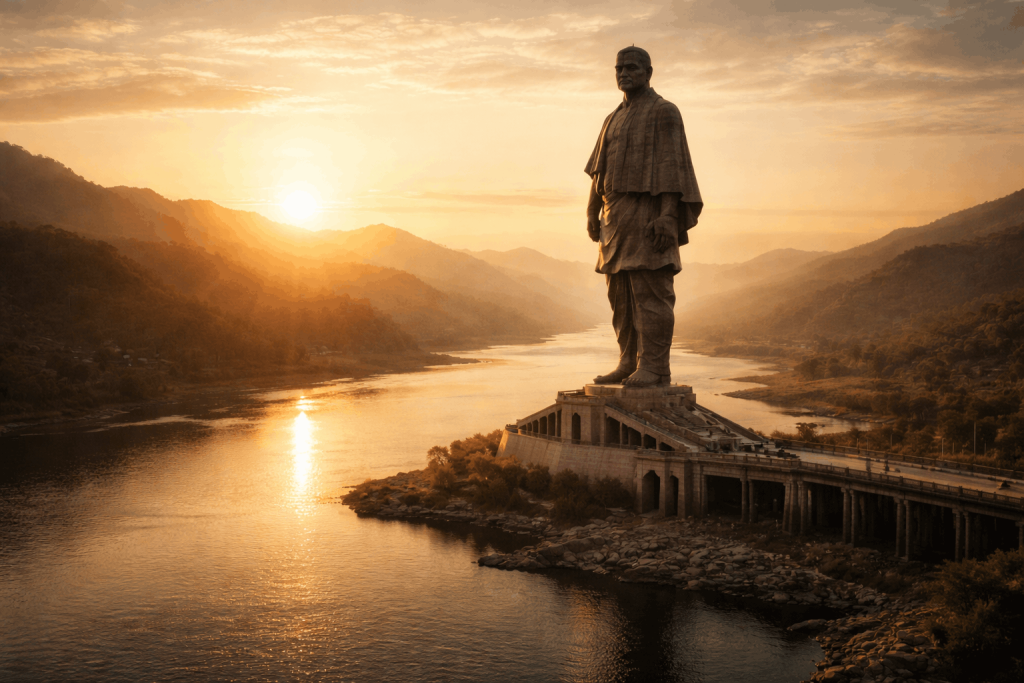
Statue of Unity (2018)
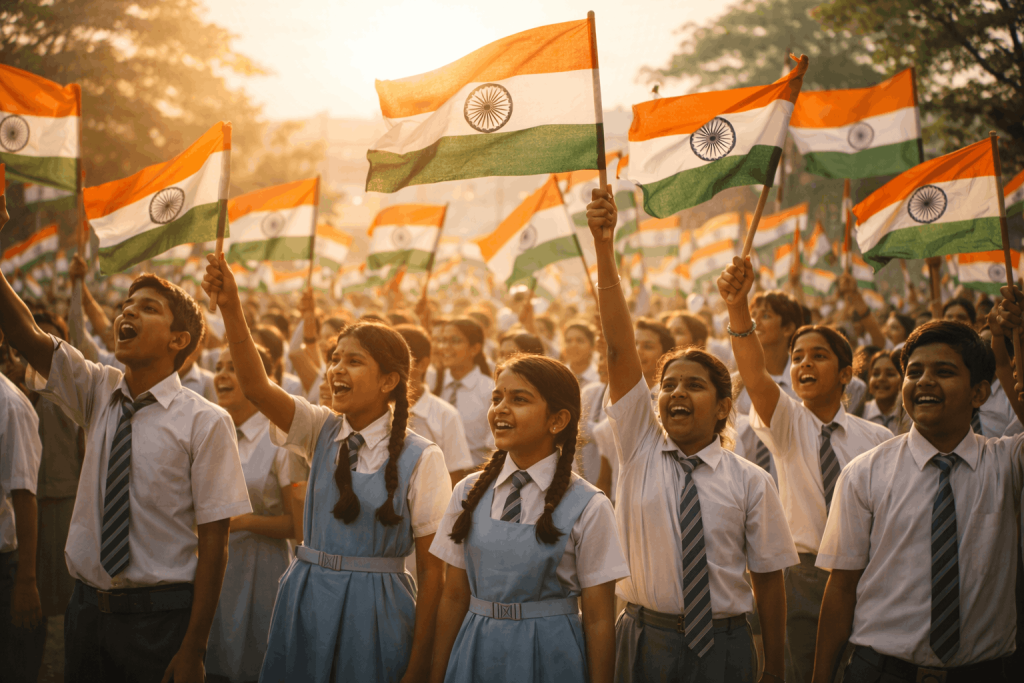
National Unity Day (31 October)
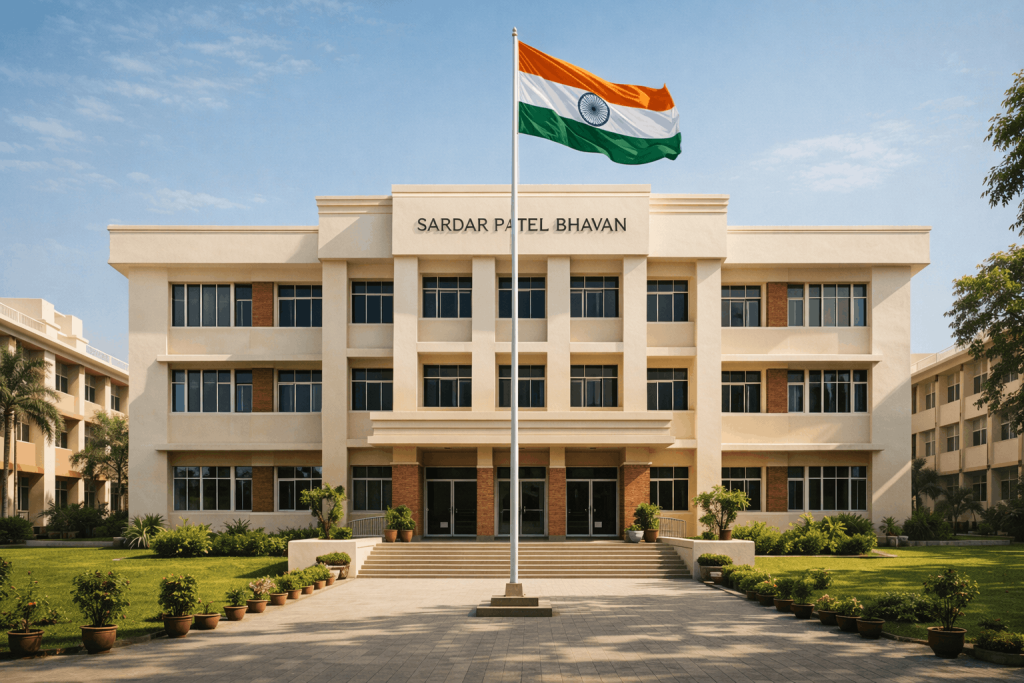
Memorials & Institutions