
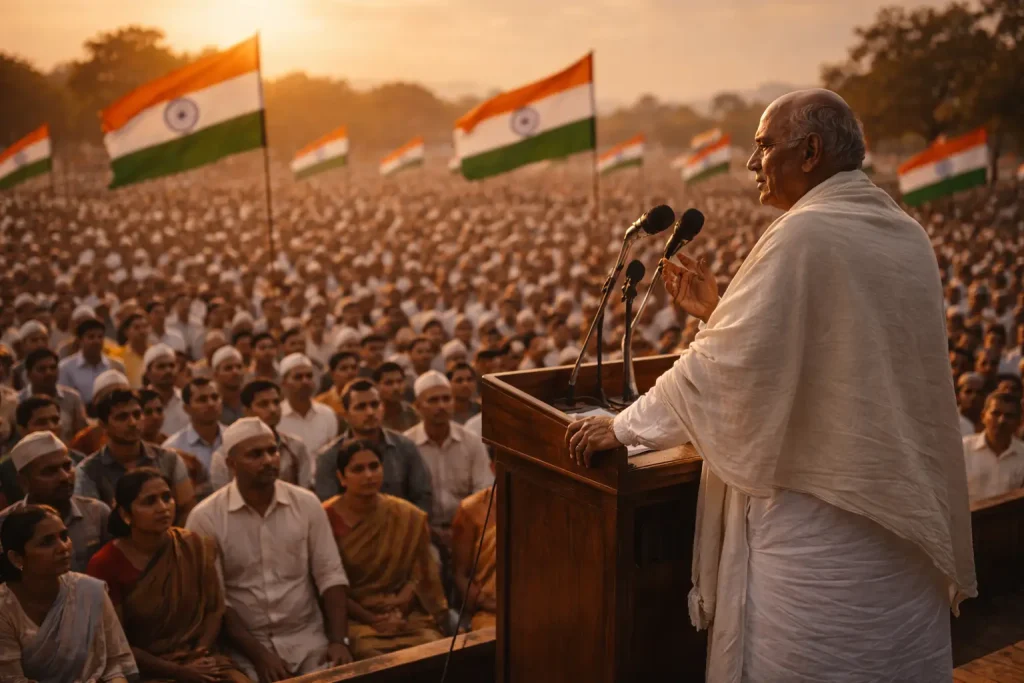
The years surrounding India’s independence were marked by extraordinary upheaval. Amid mass migration, communal tension, and administrative disruption, Sardar Vallabhbhai Patel addressed the nation with firmness and clarity. His speeches during Partition were not emotionally charged rhetoric but steady declarations of national responsibility. He appealed to citizens to maintain peace and trust in the newly formed government.
Patel’s public addresses often acknowledged the gravity of the crisis. He did not minimize the suffering of refugees or the strain on governance. Instead, he balanced realism with optimism, assuring citizens that order would be restored through coordinated administrative action. His speeches reinforced the idea that stability required cooperation between government and people.
During the integration of princely states, Patel communicated the inevitability of unity. He explained that fragmentation would weaken economic progress and national security. His clear articulation of constitutional authority reduced uncertainty and strengthened public confidence in the Union government.
His tone was disciplined but humane. While emphasizing law and order, he expressed empathy toward displaced families and affected communities. This combination of firmness and compassion defined his leadership style.
Historians now regard these speeches as pillars of India’s early democratic resilience. By addressing the nation directly and decisively, Patel transformed uncertainty into collective determination. His public communication became a stabilizing force during one of the most challenging transitions in Indian history.