Statue of Unity
An Epic of Iron, Unity, and Destiny
In the valley of the sacred Narmada, where the wind carries whispers of history,
rises a titan of resolve — the Statue of Unity.
A monument not merely built of bronze and steel,
but forged from sacrifice, vision, and iron will.
It honors Sardar Vallabhbhai Patel —
the man who bound a fractured land into a single destiny.
In the valley of the sacred Narmada, where ancient hills stand as silent witnesses and the river moves like a timeless hymn, the wind carries whispers of unfinished stories. It speaks of struggle and awakening, of a land once divided yet destined for unity.
And there — rising from earth and sky alike — stands a titan of resolve: the Statue of Unity.
Not merely a monument cast in bronze and steel,
but a colossal testament forged from sacrifice, vision, and iron will.
Each contour of its towering form holds within it the weight of history.
Each step in its foundation echoes with determination.
It honors Sardar Vallabhbhai Patel —
the steadfast architect of modern India,
the statesman who transformed fragmentation into federation,
who stitched together more than 560 princely states
into a single sovereign destiny.
When India emerged from colonial rule in 1947, it stood at a crossroads — politically free, yet internally divided. The map was uncertain. Loyalties were scattered. The future was fragile.
The Man Who Forged a Nation
When India awoke to freedom in 1947, it stood divided — over 560 princely states scattered like fragments of a broken mirror across the subcontinent.
The air was heavy with uncertainty. Borders were fragile. Loyalties uncertain. The dream of unity hung by a thread.
Through diplomacy sharpened by courage and negotiation strengthened by conviction, Sardar Vallabhbhai Patel unified the princely states — not by conquest, but by conviction.
He became the Iron Man of India. And history carved his name into eternity.
The Birth of a Colossus
Decades passed. But legends do not fade — they rise.
Decades passed.
But legends do not fade — they rise.
On 31 October 2018, in Kevadia, a tribute unlike any other was unveiled by Narendra Modi.
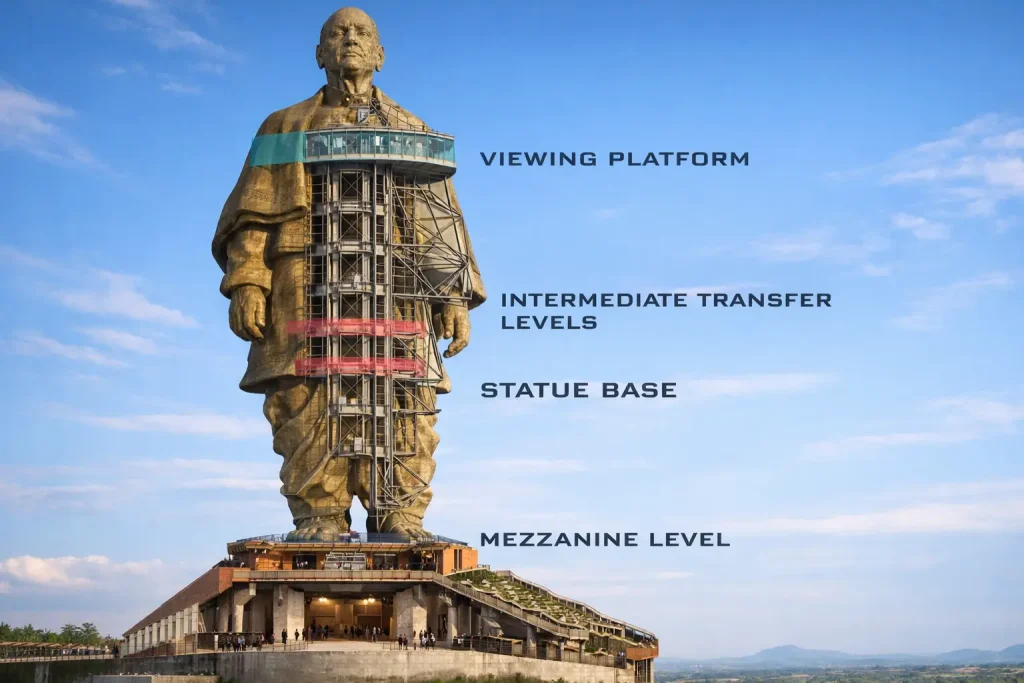
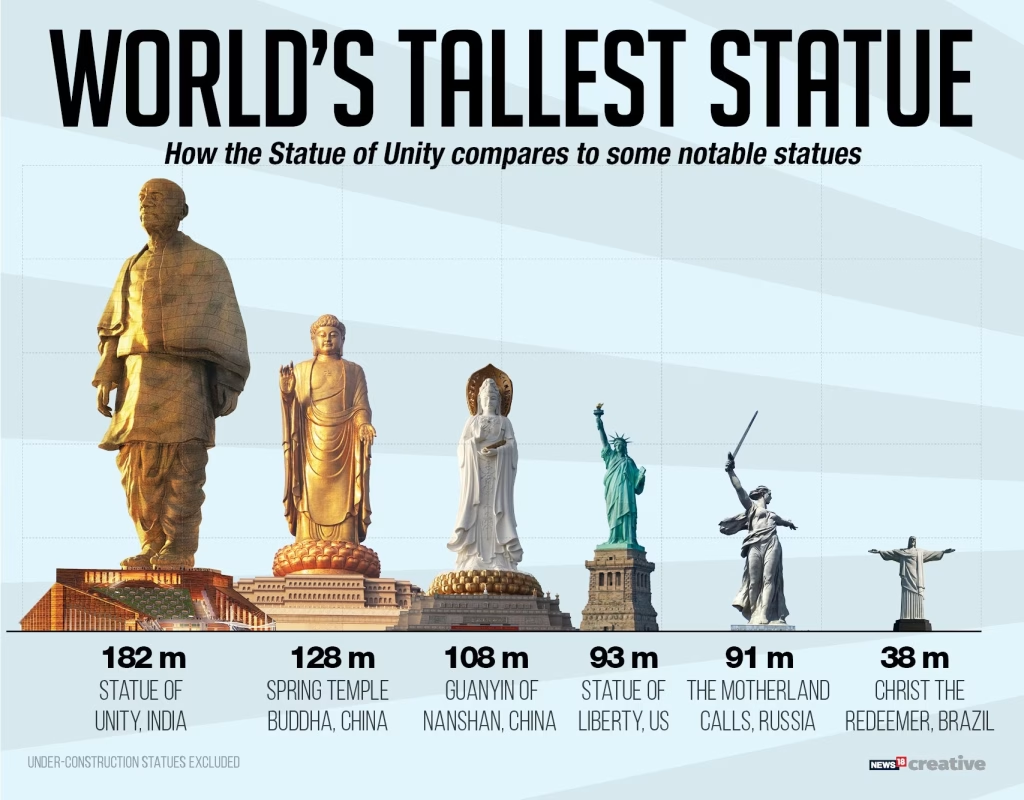
Standing at 182 meters, the statue became the tallest in the world —
a height chosen symbolically for the 182 seats of the Gujarat Legislative Assembly.
Bronze-clad. Earth-anchored. Sky-reaching.
It is not simply tall —
it is towering in meaning.
Where Earth and Legacy Meet
Beside the mighty Sardar Sarovar Dam,
surrounded by hills and the Valley of Flowers,
the monument rises like a guardian of the republic.
At sunrise, golden rays crown Patel’s face.
At dusk, shadows stretch like the pages of history.
At night, illuminated brilliance turns him into a beacon visible for miles.
Nature bows.
History stands tall.
Engineering the Impossible
Height: 182 meters
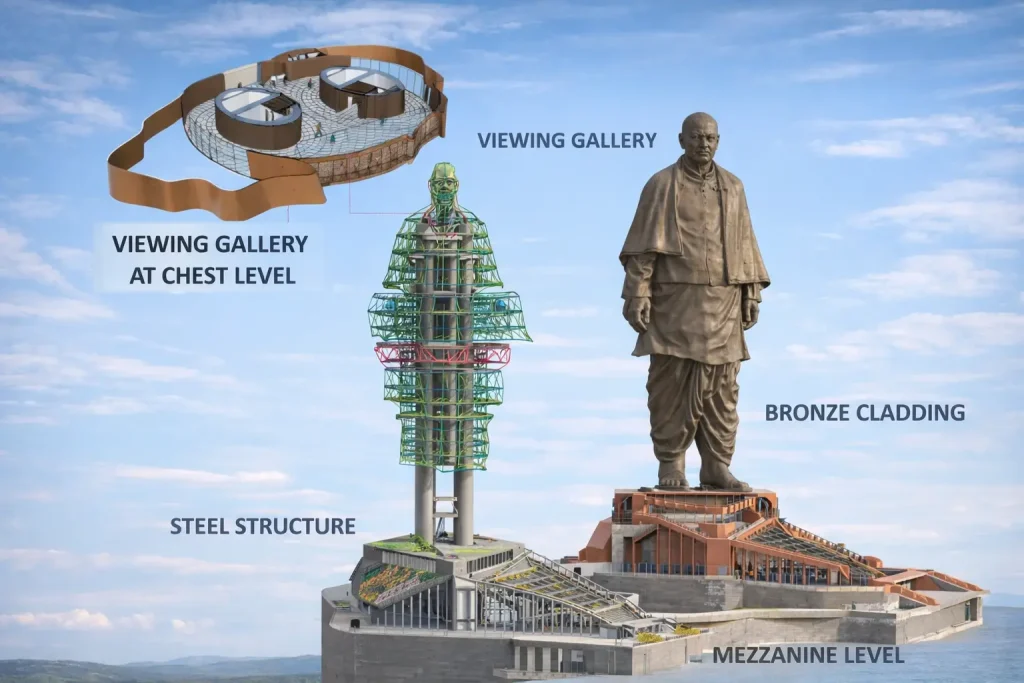
Viewing Gallery: 153 meters above ground
Wind Resistance: Up to 180 km/h
Earthquake Resistance: Built to withstand seismic activity
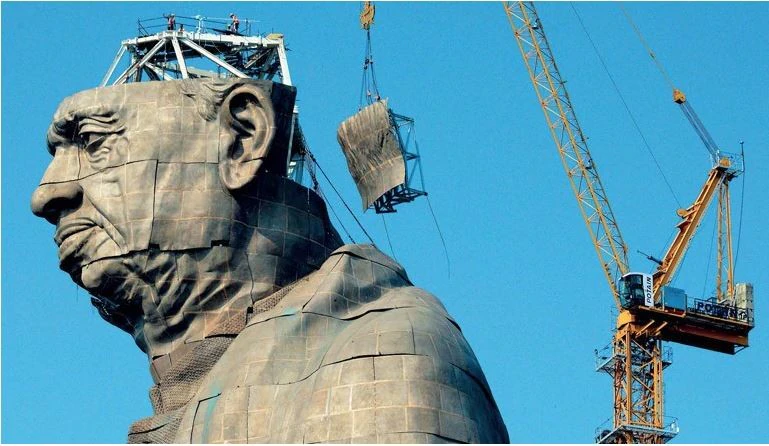
Thousands of engineers, workers, and visionaries collaborated to transform imagination into immortality.
Steel bones.
Bronze skin.
A foundation rooted in resolve.